Design Icons: The Alessi Juicy Salif
Philippe Starck sketched it on a napkin over a plate of baby octopus, Alberto Alessi had actually asked for a vase, and the result became one of the most argued-about objects in modern design. Here's why the Juicy Salif still earns its place on a shelf.

An Object Born by Accident
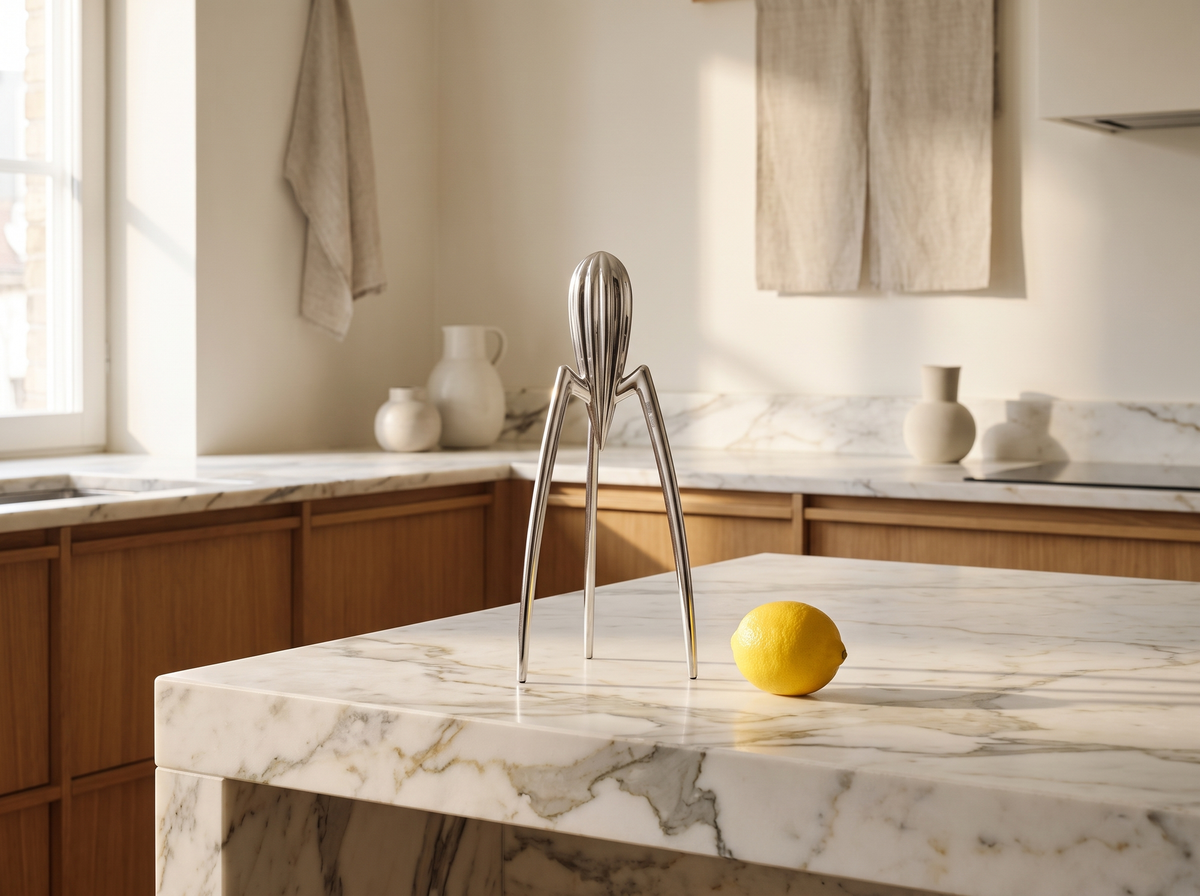
Every design icon needs an origin story, and the Juicy Salif's is better than most. In 1989, Philippe Starck was on the Italian island of Capraia, enjoying a plate of freshly caught baby octopus and squeezing lemon over it, when he set the meal aside and began sketching on the napkin in front of him. What emerged looked less like kitchenware and more like a creature — long, tapering legs beneath an elongated, bulbous head.
The twist is that nobody had asked for a lemon squeezer. Alberto Alessi had actually commissioned a tray, and reacted to the napkin sketch with the same surprise as everyone since. Starck sent it through anyway, and by 1990 it was in production — a citrus press that looked nothing like one.
Function, Reluctantly
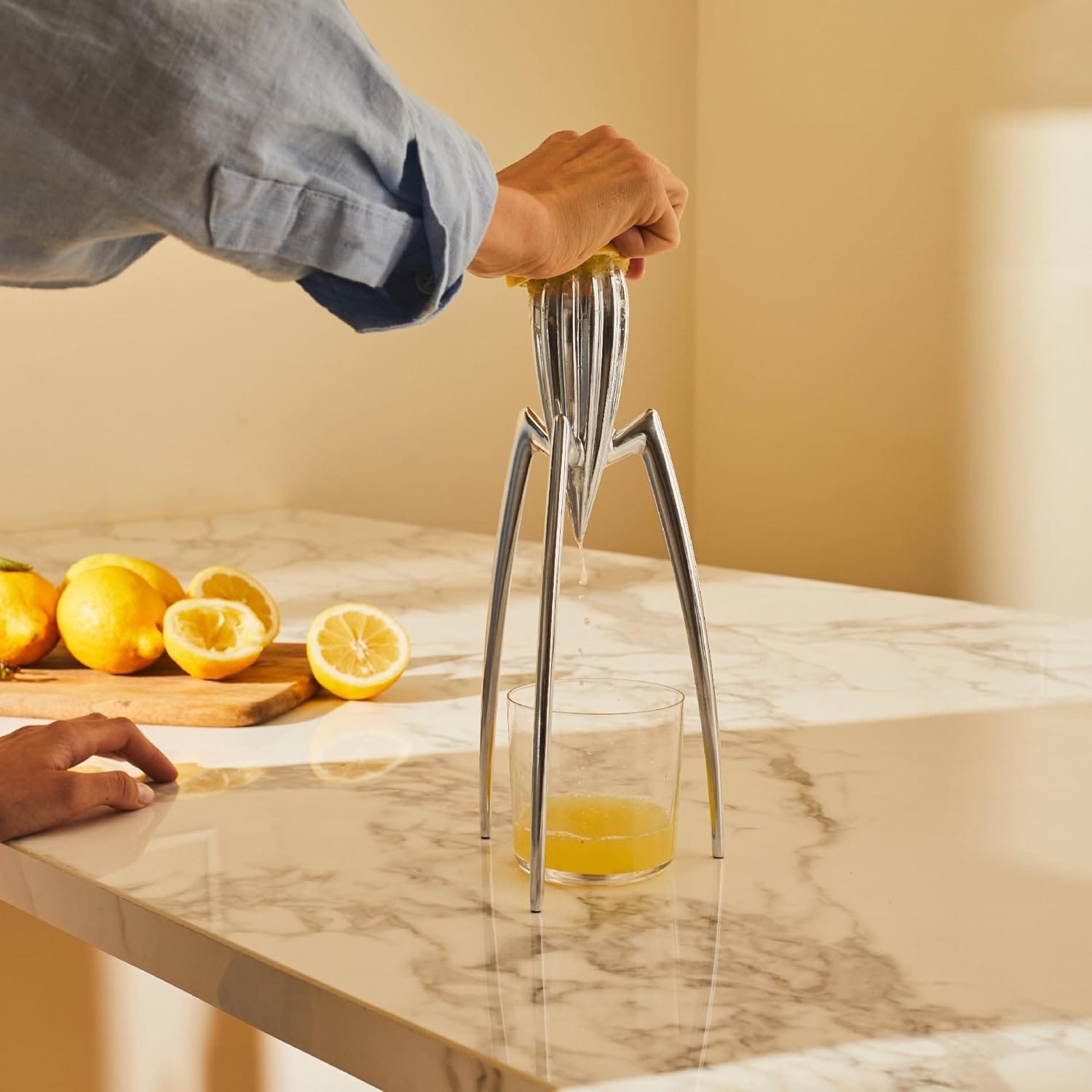
The Juicy Salif does technically work: unlike a conventional squeezer, it lets juice run straight down its ridged cone into a glass below, pips and pulp included, skipping the sieve-and-dish routine entirely. But Starck was candid about where his priorities actually sat. He's on record saying the object was never really designed to squeeze lemons — it was designed to start a conversation, and on that count, it has been unambiguously successful for over three decades.
That tension is exactly what makes it interesting. Donald Norman put the Juicy Salif on the cover of his book Emotional Design precisely because it fails at efficiency while succeeding at something harder to name — it makes you feel something before you've decided whether you'd actually use it. Design doesn't get to do that very often.
A Sculpture That Happens to Live in a Kitchen
Cast in polished aluminium, standing at roughly 29 centimetres on three impossibly slender legs, the Juicy Salif reads more like a small sculpture than an appliance — which is exactly how museums have treated it. It sits in the permanent collections of both MoMA in New York and the Centre Pompidou in Paris, alongside the kind of company most kitchen objects never keep.
It also became something of a status object in its own right, less for what it does than for what owning one signals: an appetite for design that argues with itself, that refuses to disappear quietly into a drawer.
Why It Still Holds Up
Three decades on, the Juicy Salif hasn't dated the way most 1990s design has. Its silhouette is too strange to feel period-specific, and its central provocation — that an everyday object can be sculptural, impractical, and completely justified anyway — is still one plenty of designers are working through. It remains a genuinely useful test case for anyone thinking seriously about the relationship between form and function: what happens when an object stops apologising for choosing one over the other.
Whether it ever earns its keep as an actual juicer is almost beside the point. On a shelf, a bar cart, or a kitchen counter, it does the one thing Starck intended all along.
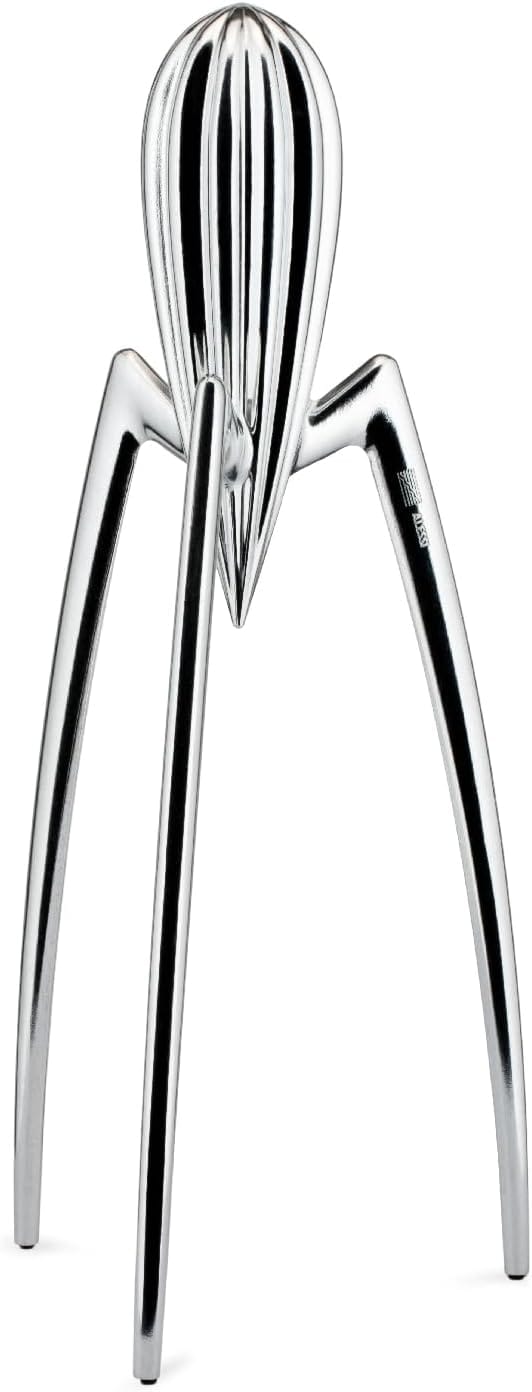
Alessi Juicy Salif Citrus Squeezer
The lemon squeezer that would rather start an argument than squeeze a lemon — and has been winning that argument since 1990.