Design Icons: Fornasetti Wall Plates
He found her in a torn-out magazine page and never met her once — yet Lina Cavalieri's face became the obsession behind hundreds of Fornasetti plates. Here's the story behind the "Tema e Variazioni" series, and the design world's most collected face.

A Face From a Magazine, Not a Life
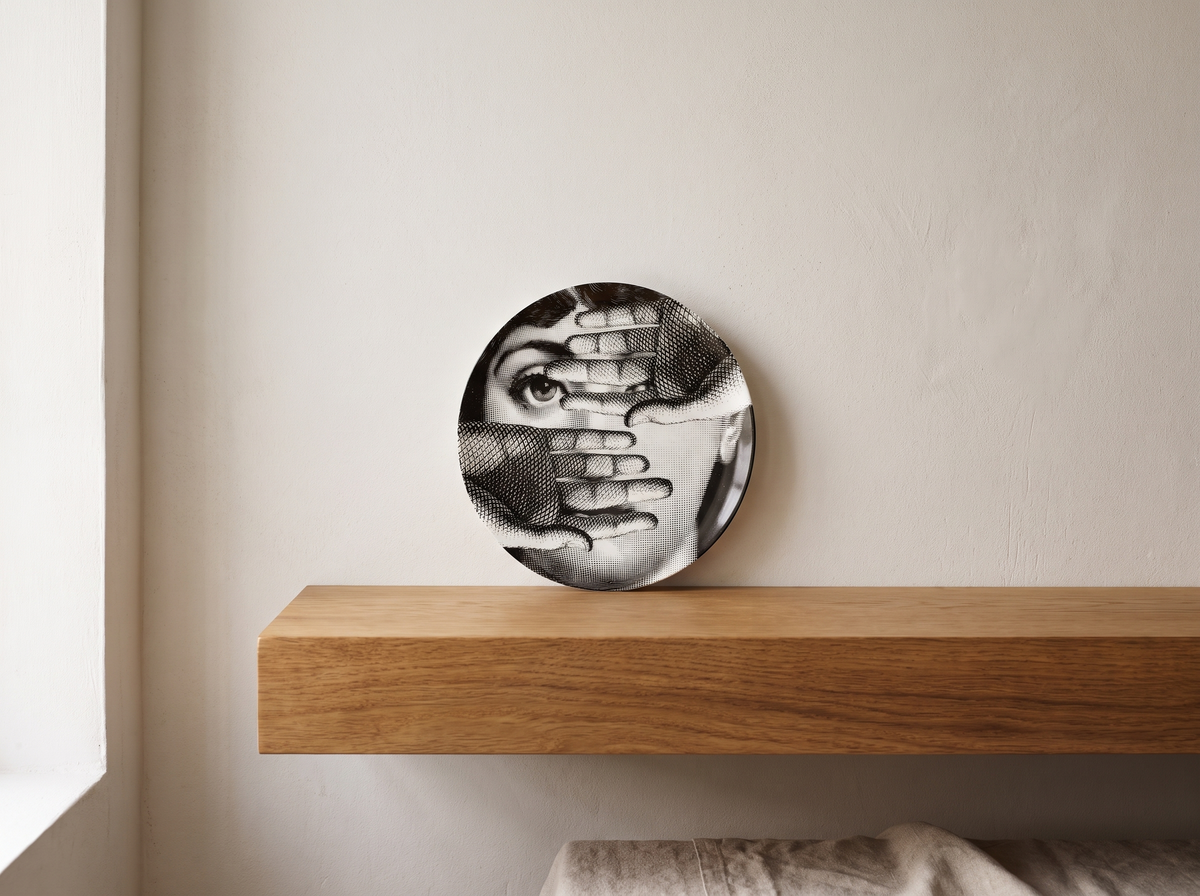
Piero Fornasetti's most famous work started with something almost accidental: a torn page from a 19th-century magazine, carrying the portrait of an opera singer he'd never seen perform and would never actually meet. Lina Cavalieri, celebrated in her day as one of the most beautiful women in the world, had classical, near-symmetrical features that struck Fornasetti as an archetype rather than a specific face — something closer to an idea of beauty than a portrait of a person.
He began painting her likeness in 1952. He didn't stop for the rest of his life.
An Obsession With No Real Explanation
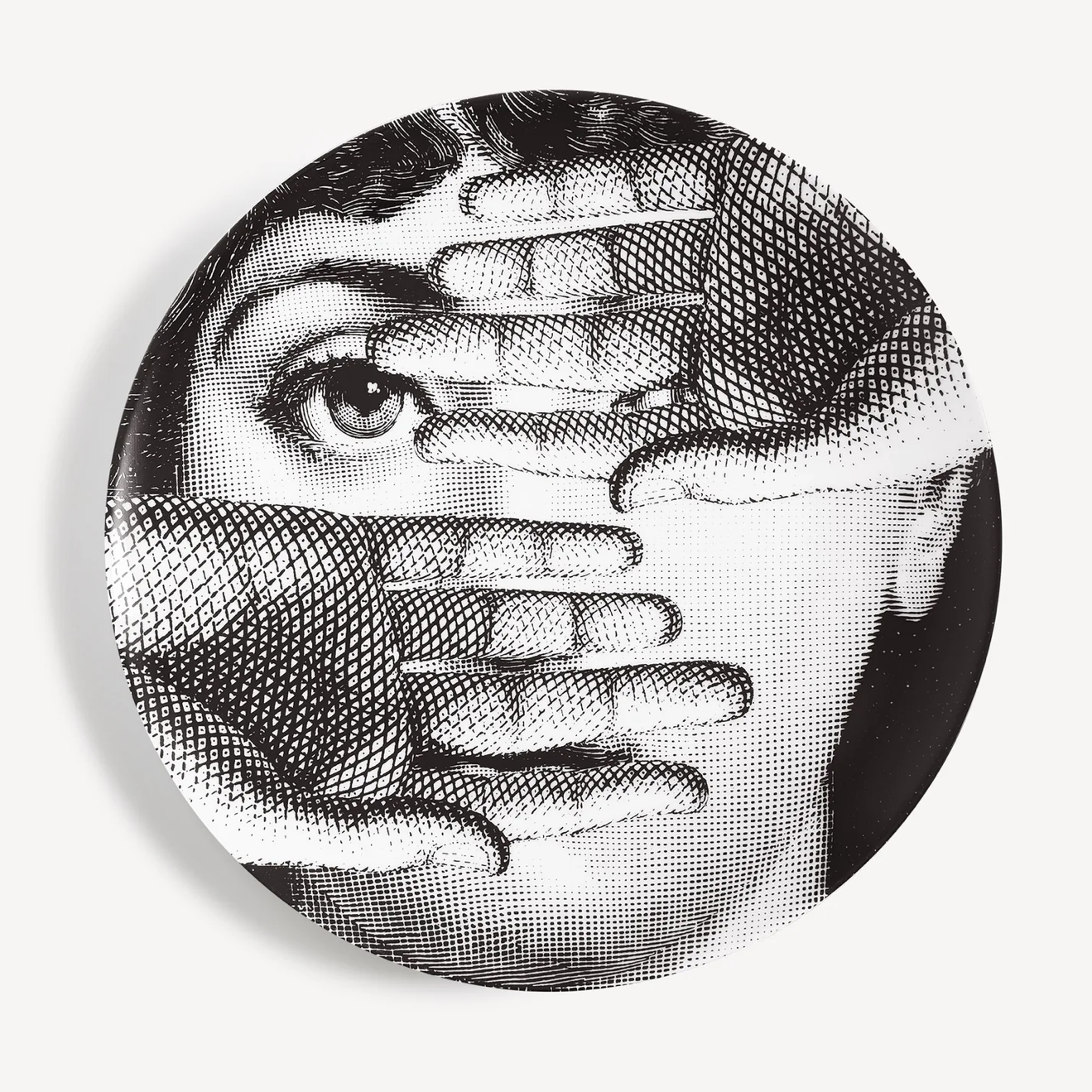
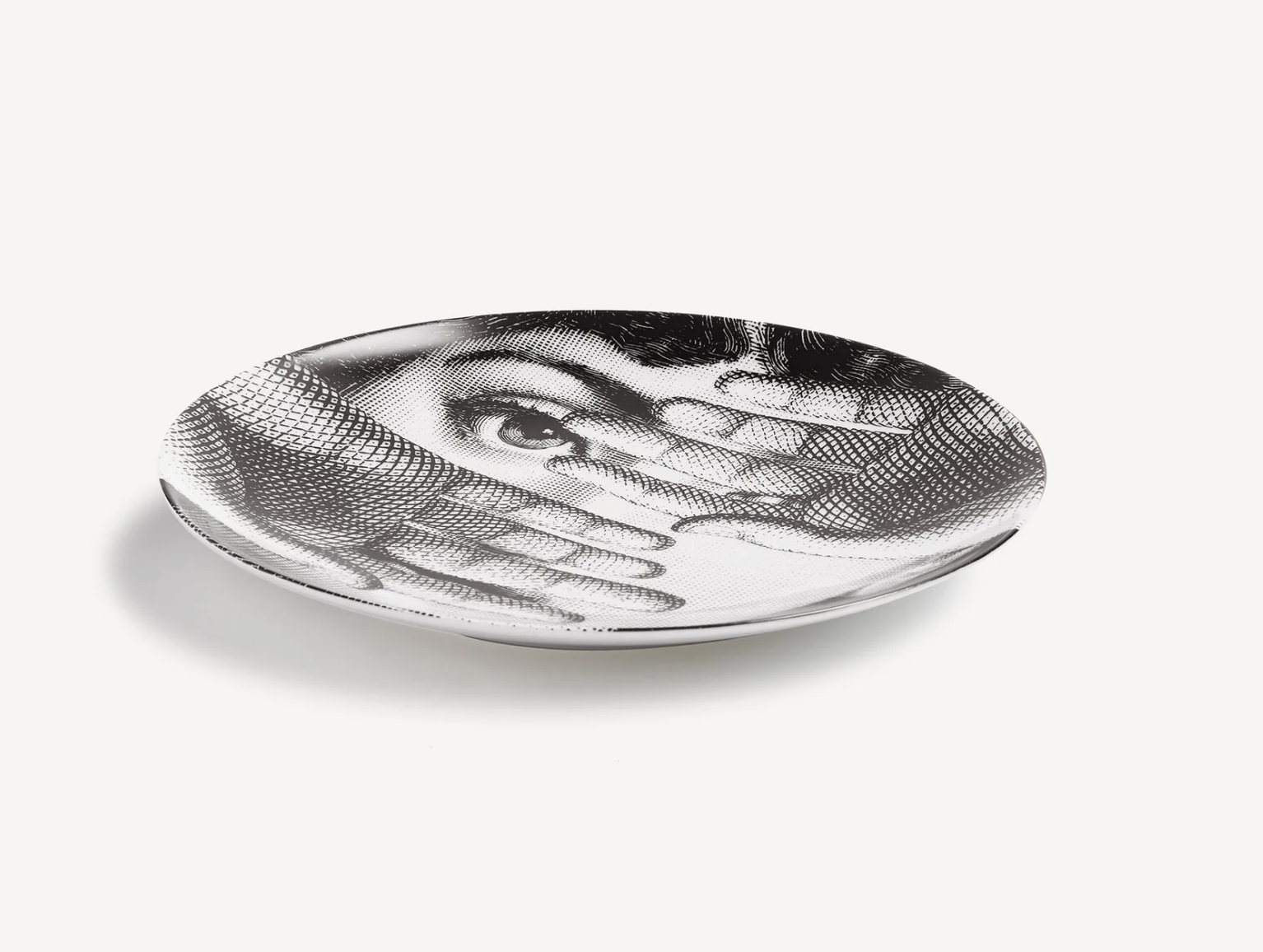
What followed became the "Tema e Variazioni" series — Theme and Variations — hundreds of plates, each one a different reinvention of the same face. Cavalieri appears startled, veiled, moustached, bespectacled, crowned, wrapped in a balaclava, framed by architecture, eclipsed by suns or playing cards or someone else's hands. The face never changes. The context around it never repeats.
Fornasetti himself seemed genuinely unable to explain the fixation. Asked what inspired him to make hundreds of variations on one woman's face, his answer amounted to: he started, and never stopped. That's not evasiveness so much as an honest account of what an obsession actually feels like from the inside — less a decision than a groove you fall into and keep returning to.
Milan's Most Prolific Eccentric
Piero Fornasetti was born in Milan in 1913 and, over the course of his career, produced somewhere in the region of 11,000 individually designed objects — plates, screens, furniture, trays, umbrella stands — each stamped with a visual language that's still instantly recognisable decades later: dense linework, theatrical trompe l'oeil, and a dry, surreal humour running underneath. The Tema e Variazioni plates are the clearest distillation of that sensibility, because the "joke" is structural — the same face, endlessly reframed, daring you to find the version that finally feels definitive. There isn't one. That's the point.
The series was serious enough, early on, to be shown at the Venice Biennale in 1952 and at the Louvre in 1955 — a strange kind of validation for plates that never stopped being at least a little bit absurd.
Why Collectors Still Chase the Numbers
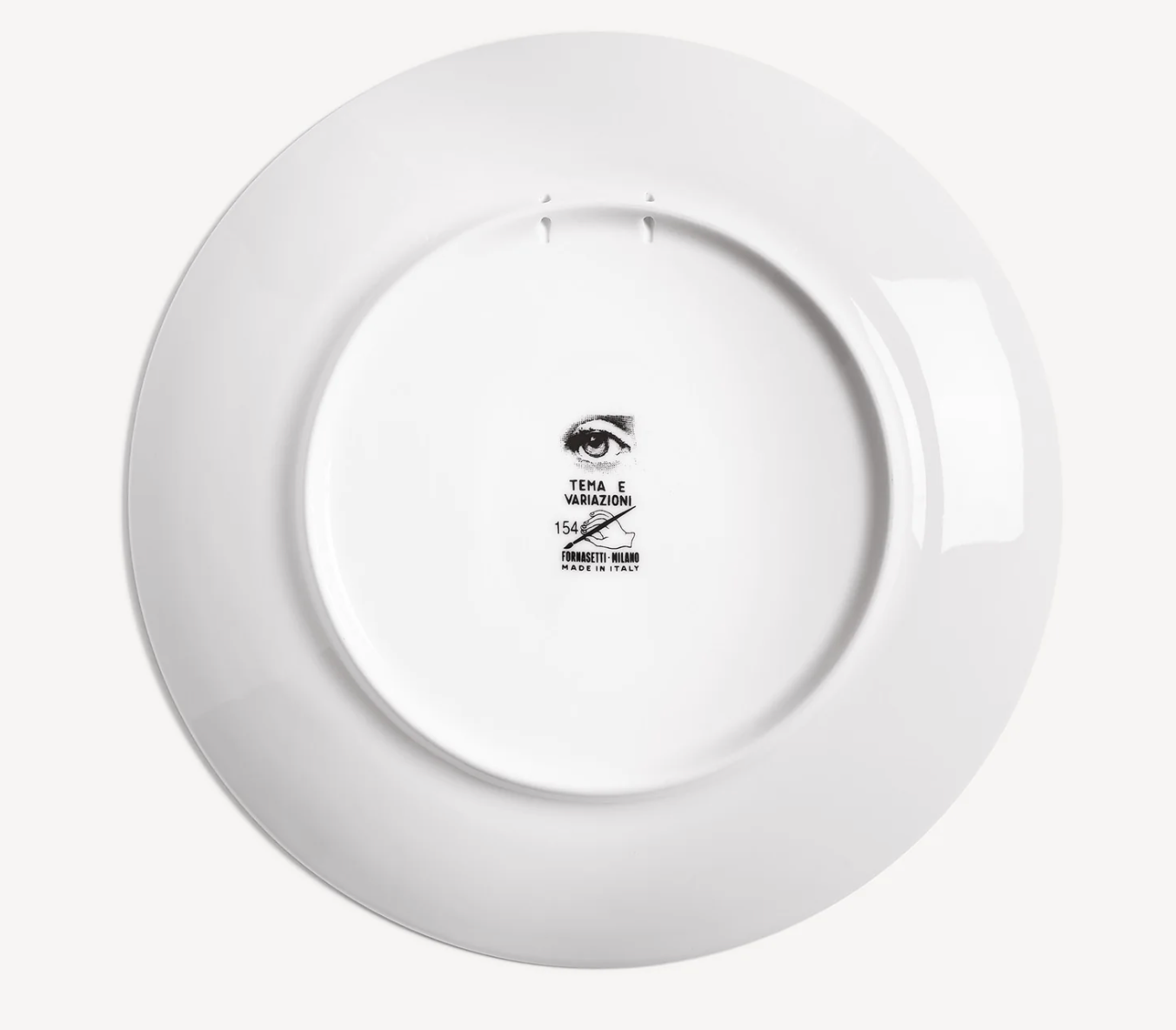
Each plate in the series carries its own number, stamped on the reverse alongside the Fornasetti mark — a small detail that turns a decorative object into something closer to a limited edition print. Collectors track them the way stamp collectors track first-day covers: not just "do I like this one" but "which number is this, and what else is out there." It's part of what keeps the series alive well beyond Fornasetti's death in 1988 — his son Barnaba has continued the atelier's work, and Lina's face is still, unmistakably, the house's signature.
A Face That Refuses to Age
What's genuinely strange about the Tema e Variazioni plates is how little they date. A face rendered in dense mid-century linework, endlessly reframed with surreal props, should feel like a period piece by now. It doesn't. Maybe it's because the joke was never about the era it was made in — it's about the impossibility of ever finishing a portrait, of ever deciding a face has been fully seen. Fornasetti kept circling that idea for thirty-six years. It still hasn't gotten old.